Search This Blog

Saturday, February 6, 2010

A Short History of Pakistani Films

In August 1947, when Pakistan won its Independence from the British Raaj, film production, distribution, exhibition and studios were new to us. The area comprising of what is now Pakistan was a pretty well established centre in film production. There were studios, cinemas, producers, and distributors. Lahore happened to be the Head Quarters of India's Northern Circuit. Punjabi film production was particularly well established here and there were three major studios in Lahore in the mid-forties.

On the eve of Independence, some film talent in Lahore left for Mumbai and some talent from Mumbai left for Lahore and Karachi. Some of the major names migrating from Mumabi to Lahore included singer-actress Noorjehan and her director-editor husband Shaukat Rizvi, actor-director Nazir and her actress wife Swaranlata, director Subtain Rizvi, composers Master Ghulam Haider and Khursheed Anwar, and producer-director W.Z.Ahmad. This talent, along with the film people already based in Lahore, started rebuilding, renovating and refurbishing film studios and cinemas. Shaukat Rizvi and Noorjehan came up with the country's first film studios, Shahnoor, in the early fifties. This was followed by G.A. Gul in setting up his own compact but well equipped Evernew Studios, Bari Malik with Bari Studios and Shabab with Shabab Studios. The first Pakistani film Memories (Teri Yaada, 1948) was a pre-Independence venture that came out in September 1948 and became the first ever Pakistani film. Directed by Dawood Chand with Nasir Khan, Pran and Asha Posley, the film was so bad that filmgoers rejected it on the first day. Hichkolay (1949), Shahida (1949), Sachai (1949), Ghaltfehmi (1949), Pherey (1949) and Mundri (1949) followed Memories soon after.

Anonymous (Gumnam, 1954).
Anonymous (Gumnam, 1954)

The major trends seen in the early years in films included pretty much what the film makers had inherited from Mumbai: love and romance, tragedy, and melodrama. These films could not be distinguished from their commercial counterparts in Mumabi. Betrayal, death, loyalty, faithfully dedicated heroines versus a home wrecking vicious vamp. The Punjabi films had bits of soft action where villain and hero would stage fights with sticks (hard to believe today, what with assault rifles and elaborate blood baths with gory and explicit graphic details).

Anwar Kemal Pasha rose as the country's first total film maker who scripted, produced and directed his own films. He also had his own distribution office at Lahore. The son of dramatist Hakim Ahmad Shujah, Anwar Kemal was not only an M.A., but was cultured and cultivated. He also happened to be a filmmaker who promoted young talent. Dozens of assistant directors, actors and composers graduated under his guidance. He introduced top superstars like Aslam Pervaiz, Musarrat Nazir, Nayyer Slutana and Bahar. Anwar Kemal's films dealt with issues of poverty, love, social strata, suicide, moral decay and death. His notable films included Anonymous (Gumnam, 1954), Killer (Qatil, 1955), Brave (Sarfarosh, 1956) and Courtesian (Anarkali, 1958). Kemal's decline came with his pride and indulgence and by the sixties he was a forgotten name in the film trade.

The sixties saw a new breed of directors: Khalil Qaiser, Masood Pervaiz (who began in the fifties), Riaz Shahid, S.Suleman, Hassan Tariq and Pervaiz Malik (who earned his MA in Cinema from the University of Southern California ). In the seventies, Nazrul Islam joined them for giving some of the best films like Conscious (Ehsas, 1972), Truth (Haqeeqat), Mirror (Aina, 1974), Life (Zindigi) and later The Bar (Bandish, 1980) and Sweet Sixteen (Nahi Abhi Nahi, 1981) in the eighties. In the last twenty years, Shamim Ara, Javed Fazil Sangeeta, Javed Shaikh and Syed Noor have been the prominent directors. Khalil Qaiser and his screenwriter Riaz Shahid were rebellious filmmakers who made films against the evils of the society - be it poverty, corruption, the atrocities of the British Raaj or oil in the Middle East. Their canvas ranged from Martyr (Shaheed, 1962) and Foreigner (Farangi, 1964) to Patriot (Zerqa, 1969). Sangeeta also made a meaningful film Handful of Rice (Muthi Bhar Chaval) in 1978 based on Rajinder Singh Bedi's short novel.

Two successful colour films Union (Sangam, 1964), Woman (Naila, 1965) came in the sixties but colour became a regular trend by the early-seventies. Love Legend (Heer Rajah, 1970) by director Masood Pervaiz and producer-actor Ijaz shall always remain a milestone in Pakistani colour films. Hassan Tariq's Last Sin (Eik Gunah Aur Sahi, 1975), based on Sadat Hussain Minto's short story, was also a meaningful film.

Last Sin (Eik Gunah Aur Sahi, 1975).
Last Sin (Eik Gunah Aur Sahi, 1975)

With Martial Law in 1977, Punjabi filmmakers turned to hard violence, vengeance and retribution and there was then no end to killings on the silver screen. Macho hero Sultan Rahi became the most bankable name in the film trade in 1978, lensing five to six films every day until his tragic untimely death on the highway in the nineties.

The eighties and nineties saw the decline in filmgoers due to wild, uncensored and smuggled video and satellite TV. Now the film trade in 2006 is facing monstrous Cable TV, VCD and DVD. The CD Channels of Cable TV are showing latest Indian and Hollywood flicks illegally. Members of the film trade met Prime Minister Shaukat Aziz in June 2005 for their grievances. The Prime Minister promised to look into the cable piracy.

Alternate Cinema

Screenwriters, producers and directors have attempted to produce alternate films but their efforts have largely failed both commercially and critically. Director A.R.Kardar's Day Shall Dawn (Jago Huwa Savera) in 1959 and Patriot (Qasam Aus Waqt Ki, 1970) were total disasters due to harsh realism and a poor screenplay respectively. Ashfaq Malik's Shades of Life (Dhoop Aur Saey,), Hamid Akhtar's Distant Dream (Sukh Ka Sapna, 1962) and Riaz Shahid's Inlaws (Susral, 1962) did not pay back either.

Film societies have not been a tradition here because of the firm roots by commercial cinema. Film societies have existed, the oldest being of the Government College Lahore with a large film library. The Asian Study Group and Pakistan-Indian Peace and Friendship Forum in Islamabad also show film regularly in their film club. The French Centre and Goethe Centre also screen films for their film club members. The Embassies of Iran, China and Japan are also active in holding regular film festivals. NAFDEC (National Film Development Corporation) also ran PESFA (Pakistan Institute for the Study of Film Art), which arranged film festivals and ran an art film magazine: Cinema - The World Over. Now the Kara Film Festival is being held regularly for the last five years at Karachi , Lahore and Islamabad . Last year, the Fifth Kara Film Festival became the most prestigious event of the year with the final ceremony attended by President Pervaiz Musharraf. The festival showed many prestigious Indian films with prominent Indian celebrities Mahesh Bhatt, Pooja Bhatt, Subhash Ghai and Anupan Kher who made it in person to the festival.

Teri Yaad.
Teri Yaad

Role of the Government

The film industry in Pakistan must be credited and blamed for its rise and fall. The Government has had practically no role except to censor films and issue censor certification. The first President Film Award was given in sixties and later the National Film Development Corporation began giving the National Film Award for excellence in films since 1983, which lasted for sixteen years.

The State Film Authority was set up in 1973 by the Government to regulate the affairs of the film trade and bring improvement by registering film producers, participating in film festivals and holding Pakistani film weeks abroad. It was a futile exercise. Similarly the Authority's plan to set up a film academy did not flourish and the Authority was disbanded in 1978.

The Federal Government desperately wanted improvement in the affairs of the film trade. NAFDEC (National Film Development Corporation) was established in 1973 as a Public Limited Corporation with the following Charter of Activities: Import of quality films, import of unexposed films, sSet up new cinemas and studios, establish film academy, set up film sub-titling unit, promote film export, hold film festivals, participate in film festivals abroad, promote National film Awards for excellence in film craft.

NAFDEC took a number of steps and imported selected quality films but film importers largely resented this import. NAFDEC made a service charge on import of films and raw stock. Importers and producers opposed this. The film trade never ever accepted NAFDEC's existence. Import of raw stock and films was taken away from NAFDEC by Prime Minister Mrs. Benazir's government in the early-nineties. NAFDEC had no source of earning and lived hand to mouth for the next ten years. Finally the end came in 2002 and NAFDEC was liquidated and that was the end of film promotional and development activities by the Government through its autonomous body.

The Future

The annual film production has come down from 142 films in 1970 to barely 50 in 2005. The number of studios has come down from 11 in 1977 to 3 in 2006. Similarly, the cinemas have been reduced from over 700 in 1977 to 250 in 2006. And yet a generation of young filmmakers trained in TV and video production is turning to films. Their work is being shown on Independent TV channels and Kara Film Festival. Films like Silence (Khamoshi) and The Death of Shahrukh Khan (Shahrukh Khan Ki Maut) are new gems in filmmaking. Hopefully, work of these and other filmmakers would continue on TV, Cinemas and at the Kara Film Festival.

Modern Poetry of Pakistan


Poetry
200 Pages
ISBN: 978-1-59766-043-3

Paper: $24.95

Muslim rulers were once known to reward their poets “by filling their mouths with pearls, weighing them in gold, and granting them villages.” Poetry remains the dominant literary idiom of modern Pakistan, as it has been in Islamic cultures for centuries. Modern Poetry of Pakistan brings together forty outstanding Pakistani poets, with new translations from Urdu, Balochi, Sindhi, Punjabi, Saraiki, and Pashto. The collection includes the work of acknowledged masters, such as Allama Muhammad Iqbal, Ghani Khan, and Josh Malihabadi, but it also presents the work of poets who speak in a distinctly contemporary voice—Sheikh Ayaz, Nasreen Anjum Bhatti, Faiz Ahmad Faiz, Hasina Gul, Zafar Iqbal, Kishwar Naheed, Munir Niazi, N. M. Rashid, Fehmida Riaz, and Pushpa Vallabh, to name but a few.

The Urdu poetic tradition is famous for its mushairas—assemblies where poets gather to recite their poetry before large audiences, who shout “Wah, wah!” in appreciation of unusual poetic dexterity or subtlety of thought. In its range of themes and styles, and in its celebration of poetic inspiration, Modern Poetry of Pakistan aims to uphold the spirit of that tradition.

Iftikhar Hussain Arif, an Urdu poet, scholar, and literary advocate, is best known for his romantic and bold poetic style. He is the chairman of the Pakistan Academy of Letters and a past recipient of Pakistan’s prestigious Hilal-i-Imtiaz literary award. Written in the Season of Fear, a collection of his poems in English translation, was published by Oxford University Press–Pakistan in 2003. His poems have also appeared in German, Hindi, Persian, and Russian.

Waqas Ahmad Khwaja is a poet and a professor of English at Agnes Scott College. His most recent collection, No One Waits for the Train (Alhambra Publishing, 2007), chronicles the devastation that surrounded the partition of India. He is also the editor and translator of Mornings in the Wilderness, an anthology of Pakistani literature (Sang-e-Meel Publications, 1988).

The publication of Modern Poetry of Pakistan was funded in part by the International Literary Exchange program of the National Endowment of the Arts.

Amazing Pakistan

Pakistan meaning the “The land of pure” where each day the sun rises with a new hope, with an enduring majesty as the rays of light flushing down towards the snowcapped peaks of Himalaya’s and Nanga Parbat. A land where love finds a meaning in the heart warming hospitability of people, a land where history and ancient civilization mystifies one’s heart, a land where spiritualism unveils its mystery at the shrines of Sufi Saints. This is the land I belong to, this is the land I’ll die for and this is the land that defines my identity.

The Invincible 167 Million : 6th largest Nation of the World

people-of-pakistan

The invincible 167 million Pakistani’s progressing forward with high hopes and a mission holding an unquenchable thirst to be the world leader’s soon. Despit the chaos, despite the ill spilled by the westeren media to demoralize the nation and to uproot the patriotism from the hearts and minds of people of this country, despite the foreign funded terrorists bombing hundreds of Pakistani’s each day painting the roads red with the blood of young children, women and men. Every drop of it shouts back loud ” You can never take us down, We’ll fight back till our last breath“. Reminding you this is the nation which has a 7th largest pool of scientists and Engineers in the World[1]. and the country that is ranked 9th in the world where English language is spoken and used as an official language [1].

Pakistan: World's 9th Largest English Speaking Country |  Photo by Sultan Dogar: Abbotabad Medical College

Pakistan: World’s 9th Largest English Speaking Country | Photo by Sultan Dogar: Abbotabad Medical College

Pakistan: World 7th largest Pool of Scientists and Engineer | Photo : Moin Ali Nawazish making a World Record by passing 23 A level Exams

Pakistan: World 7th largest Pool of Scientists and Engineer | Photo : Moin Ali Nawazish making a World Record by passing 23 A level Exams

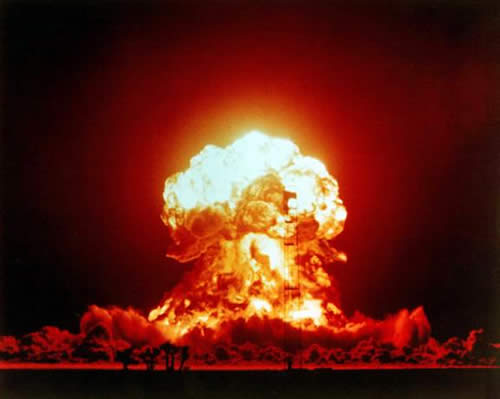
The Might : 7th Nuclear Power of the World

nuclear_explosion

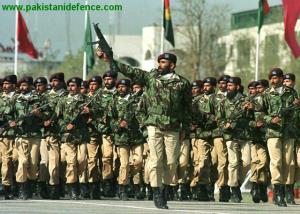
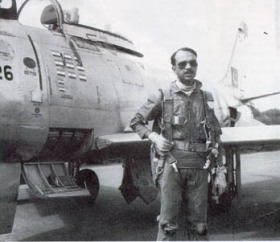
On May 28, 1998, Pakistan became the 7th nuclear power of the world giving a loud and clear message to the enemies that this nation is fully equipped and ready to defend it’s sovereignty. Pakistan has world 7th largest standing arm forces [1] well trained possessing state of the art technology. Pakistan Air force (PAF) is the symbol of pride for the nation and a galaxy of highly trained professionals emerged in latest technological developments. The highly skilled PAF personals are renowned for their excellence and handling of aircraft and surely are the worst fear for the enemies.

Pakistan: 7th largest Standing Arm Force in the World

Pakistan: 7th largest Standing Arm Force in the World

Air force :Air Commodore MM ALAM has a world record of shoting down 5 Indian planes in less than a Minute

Air force :Air Commodore MM ALAM has a world record of shoting down 5 Indian planes in less than a Minute

asdasdasdadPakistan : The Roof Top of the World

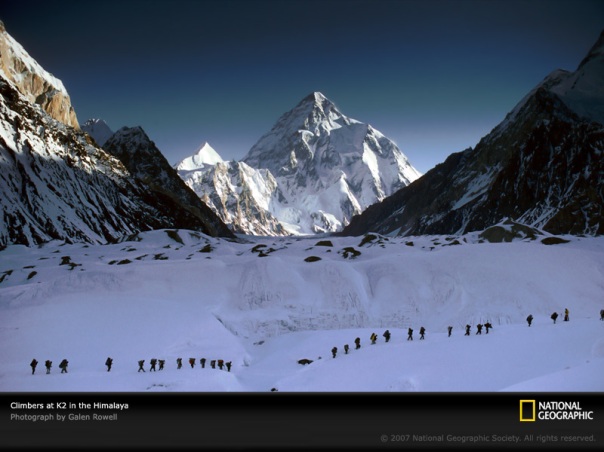
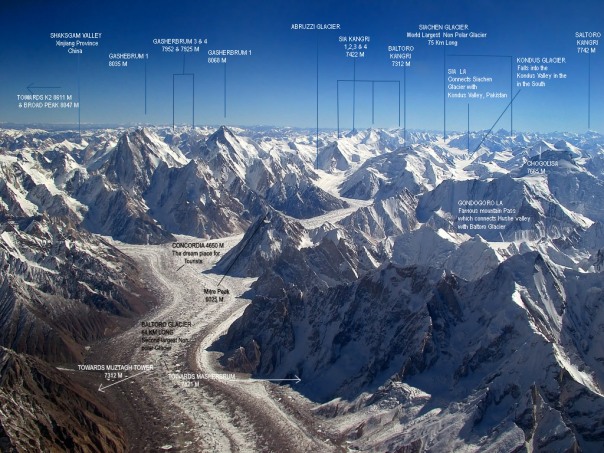
Pakistan the land of grand mountain ranges, a land that holds 4 out of 14 most highest peaks in the world. K2 the second highest mountain in the world with all it’s grandeur symbolizing the pride and strength of the people of Pakistan.

Pakistan: K2 the 2nd highest mountain peak in the World

Pakistan: K2 the 2nd highest mountain peak in the World

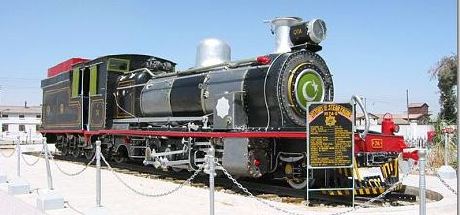
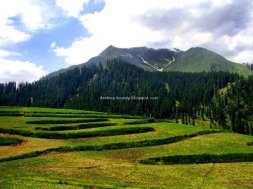
Hunza is said to be a place ” Where Time Stops and Fairy Treads“, Kalash and Chitral are the natural wonders of the world where poetic verses find their inspirations from the beauty and elegance of high peak mountains, lush green fields and the fragrant breeze singing across the poplar trees. Some of the places which are not highlighted by the media but still due to their magnitude find their places on the World record books are ; Aisa’s Highest Railway Station Kan Mehtarzai [2] that is located 2240 meters above sea level near Quetta.

Pakistan: Asia's Highest Railway Station

Pakistan: Asia’s Highest Railway Station “Kan Mehtarzai “

Pakistan: Lalazar often termed as most beautiful place on earth

Pakistan: Lalazar often termed as most beautiful place on earth

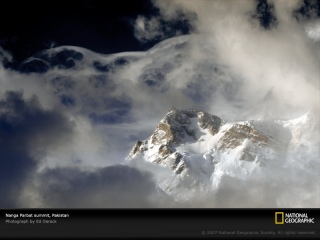
Pakistan: Nanga Parbat 9th Highest Peak in the World

Pakistan: Nanga Parbat 9th Highest Peak in the World

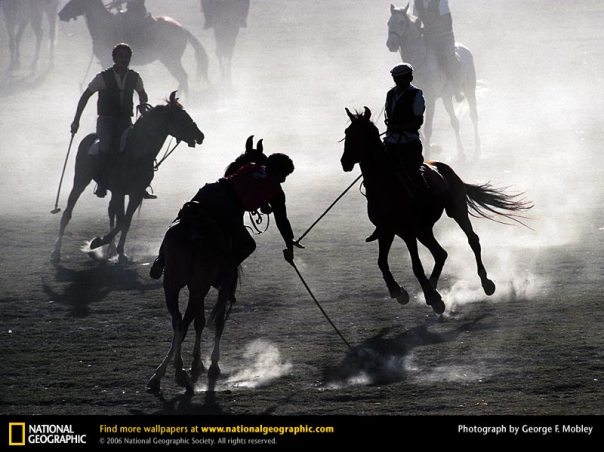
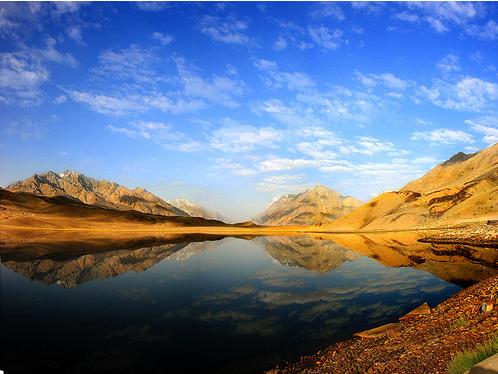
What it would feel like to play a sport that is wild, challenging and manly at the top of the world surrounded by the drumbeats and the music of the reed instrument. Yes Shandur Polo tournament is played every year at World’s highest Polo ground at Shandur, Northern Pakistan.

Pakistan: Shundur Polo festival at the World's highest Polo ground

Pakistan: Shundur Polo festival at the World’s highest Polo ground

Karakoram Highway : Eighth Wonder of the World


Karakoram Highway runs through the northern areas connecting Pakistan with China’s Xingjiang province is often described as ” Eighth Wonder of the World” due to the marvel of civil engineering as it has taken 15 years to complete by the Pakistan Army Engineers in collaboration with China. It’s been labeled as ” World’s highest paved international Road” under world’s toughest terrain.

karakorum1

Pakistan: Karakoram Highway World’s highest paved international Road

World’s Largest Deep Sea Port : Gwader


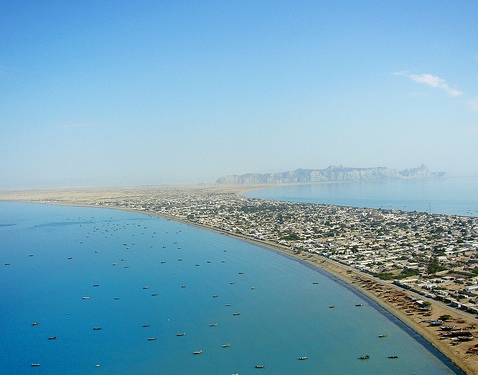
“Gwa” means Air and “Dar” means door, and the word Gawadar means ” The door of the wind” is the world’s largest deep sea port lies in southwestern Pakistani province of Balochistan. The design and construction of the port is carried out in collaboration with China and it has just started it’s operation.It’s going to emerge as a world’s biggest skyline due to it’s capacity and infrastructure of handling bulk carriers. It has been declared as a Duty Free Port and Free Economic Zone by the Pakistani government that has increased the commercial worth manifolds. It has an immense geostrategic importance as it is the entrance to the Persian Gulf and is considered to be a substitute of Dubai Port.

Gawader: World's Largest Deep Sea Port

Gawader: World’s Largest Deep Sea Port

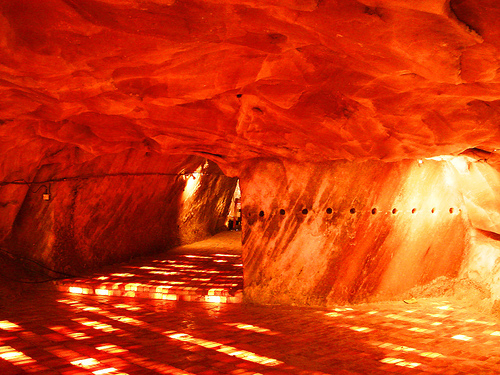
Khewra Mines : Second Largest Salt Mine in the World


Khewra Salt Mine located in Khewra, Jehlum Punjab, Pakistan is the second largest Salt Mine in the world and is considered to be the oldest in the subcontinent. It was said that discovery of Salt mines were not done by Alexander or his army but by their horses as they started licking the stones when they stopped here for rest. Thousand of visitors each year visit Khewra Salt mines and get fascinated by the nature’s miracle in the heart of mountains.

Khewra Salt Mine: Second Largest Salt Mine in the World

Khewra Salt Mine: Second Largest Salt Mine in the World

Haleji Lake : Asia’s largest Bird Sanctuary


Pakistan is a land of serene beauty , a country with diverse wild life , fresh water lakes, a 1046 km coast lines. Some of the most unique species of birds are found in northern Pakistan with awe-inspiring natural wonders like Lake Saiful Maluk, Lake Shandur, Dudipatsar Lake, kutwal lake, Zalzal lake and many more. But Haleji has it’s own significance as it is Asia’s largest waterfowl reserve. During winter thousands of birds of different species fly down to Haleji from Siberian colder areas

Pakistan: Fairy land Shandur Lake

Pakistan: The heavenly Shandur Lake

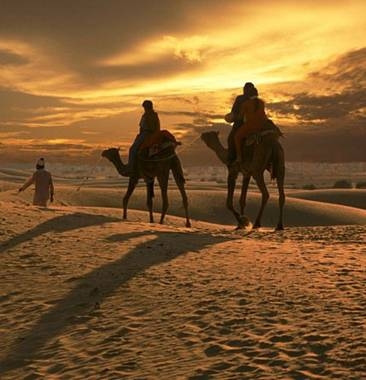
Thar Desert : One amongst the largest deserts in the World


Thar is a arid region in the north western part of Indian subcontinent, it lies mostly in Indian state of Rajasthan but it covers eastern Sindh province and the southeastern portion of Pakistan’s Punjab province. It is amongst one of the largest deserts in the world rich multifaceted culture, heritage, traditions, folk tales, dances and music. The poetic expression of Kafi written by Sufi poets of Sindh resonates in the cold nights as the Thari musicians start singing them on sorrowing rhythmic beats. In the night the granules of the sand lit up like stars as the moonlight walks on them.

Pakistan: Tharparker

Pakistan: Tharparker

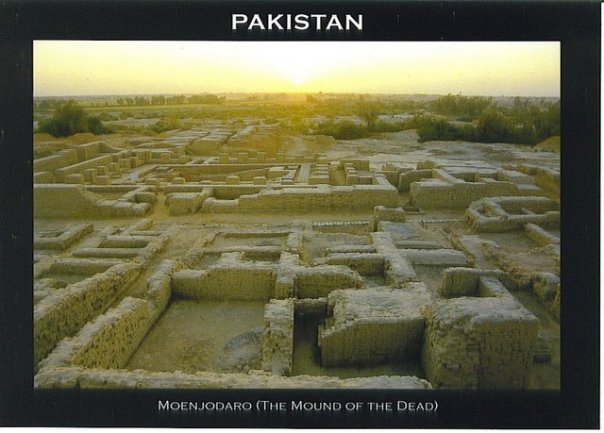
The land of oldest Civilization : Indus Valley and Mohenjo-Daro


Moenjodaro is the province of Sindh, Pakistan and archeology trace back it exitence 5000 years ago. It provides an earliest instance of exemplary form of town planning and community organization and found to be as one of the oldest cities known today. It is said to be the pilgrimage of ancient ruins. The splendor of Indus Valley civilization spread over a thousand mile from the high peak snowy mountains of Kashmir to the glittering sand dunes facing the Arabian Sea. One of the oldest known civilization that flourished in the Indus river Basin embraced within its fold almost the entire country now known as Pakistan.

One of the oldest Civilization Known today

One of the oldest Civilization Known today