Search This Blog

Tuesday, February 9, 2010

Chief vs Chief

kvv.jpg

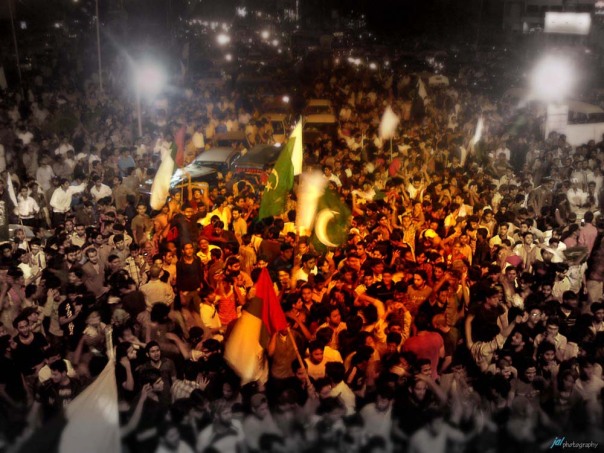
May 12, 2007 will probably go down in the history of Pakistan as the day when people realized how deadly Karachi can become. The city which has seen one of the worst bloodsheds in the early nineties when two major political forces clashed with other was again painted with red today. Interestingly I fail to understand who exactly is called a political worker in Pakistan, the youngster who is not treated equally at his home to someone who probably has committed a serious crime and finds a secure place to hide under the flag of a political party. Whatever it is, he lives with a weapon in the buckle of his belt for self defense or exploiting someone else’s defense.

The Chief Justice as they say is the guardian of the law of the country is running all over country to find justice for himself. I wonder how people who have decades long cases pending in different courts of Pakistan sees this, maybe they are smiling deep inside as now is their chance to finally draw the conclusion that Justice is a failure in our country. The lawyers who play with the laws and dates everyday are now waiting for right dates and the right decision to secure their future at least for sometime. They seek refuge in the banner of opposition parties whose life long dreams of million marches have finally come true. Whatever is the outcome of this reference will be, one thing is for sure, it is not right versus wrong, its not even government versus the opposition (they are one and the same thing except for different faces), its not MQM versus PPP, its actually “The General Versus The Chief.” I won’t be surprised to see Chaudhry Ifthikar’s name in the candidates list for the next president.

In no country you will see ruling parties holding rallies to show their strength and popularity. They are ruling because they have the majority of the support, they are ruling because they have the strength to outnumber the opposition in the assemblies. By calling peace rallies or by coloring the whole city with banners of green and red served no good for MQM and I have to say this that this decision of holding a rally on May 12 will probably go down as one of the worst decision made by Altaf Hussain in his political career. The image which they tried to build in the last 4 years, the idea of using lesser force to meet their demands have all shattered into pieces. The street rats with gutkas in their mouths and with an accomplice on their backseat of Honda 70 are back to show how much frustrated they are.The place of final showdown was unfortunately my hometown Karachi. What people saw was the exhibition of firearms not in expo centre but on the main streets of Karachi. The law enforcement agencies enjoyed a day off and preferred to sit back and enjoyed the show.

ssss.jpg

The state which is responsible for providing security to its citizens was busy in organizing their Gala Affair at Islamabad where president of the country is to preside a gathering for the ruling party. The only thing that is on his mind is probably his re election. The city where they say people love enjoying and going out remained in their homes hearing the sounds of crackers outside their homes. Eighteen people died today up to now. Who are they, which political party they belong to, the either side is calling them martyrs, were they justified in terrorizing the city, were they justified in their protests.

I think as a society we are unable to choose the medium of expression for ourselves, we don’t know how to put our demands, we don’t know the means to acquire them. I think we all are seeking justice of some kind. We finally want some rules to prevail in our country but are we ready to accept them.

Saturday, February 6, 2010

A Short History of Pakistani Films

In August 1947, when Pakistan won its Independence from the British Raaj, film production, distribution, exhibition and studios were new to us. The area comprising of what is now Pakistan was a pretty well established centre in film production. There were studios, cinemas, producers, and distributors. Lahore happened to be the Head Quarters of India's Northern Circuit. Punjabi film production was particularly well established here and there were three major studios in Lahore in the mid-forties.

On the eve of Independence, some film talent in Lahore left for Mumbai and some talent from Mumbai left for Lahore and Karachi. Some of the major names migrating from Mumabi to Lahore included singer-actress Noorjehan and her director-editor husband Shaukat Rizvi, actor-director Nazir and her actress wife Swaranlata, director Subtain Rizvi, composers Master Ghulam Haider and Khursheed Anwar, and producer-director W.Z.Ahmad. This talent, along with the film people already based in Lahore, started rebuilding, renovating and refurbishing film studios and cinemas. Shaukat Rizvi and Noorjehan came up with the country's first film studios, Shahnoor, in the early fifties. This was followed by G.A. Gul in setting up his own compact but well equipped Evernew Studios, Bari Malik with Bari Studios and Shabab with Shabab Studios. The first Pakistani film Memories (Teri Yaada, 1948) was a pre-Independence venture that came out in September 1948 and became the first ever Pakistani film. Directed by Dawood Chand with Nasir Khan, Pran and Asha Posley, the film was so bad that filmgoers rejected it on the first day. Hichkolay (1949), Shahida (1949), Sachai (1949), Ghaltfehmi (1949), Pherey (1949) and Mundri (1949) followed Memories soon after.

Anonymous (Gumnam, 1954).
Anonymous (Gumnam, 1954)

The major trends seen in the early years in films included pretty much what the film makers had inherited from Mumbai: love and romance, tragedy, and melodrama. These films could not be distinguished from their commercial counterparts in Mumabi. Betrayal, death, loyalty, faithfully dedicated heroines versus a home wrecking vicious vamp. The Punjabi films had bits of soft action where villain and hero would stage fights with sticks (hard to believe today, what with assault rifles and elaborate blood baths with gory and explicit graphic details).

Anwar Kemal Pasha rose as the country's first total film maker who scripted, produced and directed his own films. He also had his own distribution office at Lahore. The son of dramatist Hakim Ahmad Shujah, Anwar Kemal was not only an M.A., but was cultured and cultivated. He also happened to be a filmmaker who promoted young talent. Dozens of assistant directors, actors and composers graduated under his guidance. He introduced top superstars like Aslam Pervaiz, Musarrat Nazir, Nayyer Slutana and Bahar. Anwar Kemal's films dealt with issues of poverty, love, social strata, suicide, moral decay and death. His notable films included Anonymous (Gumnam, 1954), Killer (Qatil, 1955), Brave (Sarfarosh, 1956) and Courtesian (Anarkali, 1958). Kemal's decline came with his pride and indulgence and by the sixties he was a forgotten name in the film trade.

The sixties saw a new breed of directors: Khalil Qaiser, Masood Pervaiz (who began in the fifties), Riaz Shahid, S.Suleman, Hassan Tariq and Pervaiz Malik (who earned his MA in Cinema from the University of Southern California ). In the seventies, Nazrul Islam joined them for giving some of the best films like Conscious (Ehsas, 1972), Truth (Haqeeqat), Mirror (Aina, 1974), Life (Zindigi) and later The Bar (Bandish, 1980) and Sweet Sixteen (Nahi Abhi Nahi, 1981) in the eighties. In the last twenty years, Shamim Ara, Javed Fazil Sangeeta, Javed Shaikh and Syed Noor have been the prominent directors. Khalil Qaiser and his screenwriter Riaz Shahid were rebellious filmmakers who made films against the evils of the society - be it poverty, corruption, the atrocities of the British Raaj or oil in the Middle East. Their canvas ranged from Martyr (Shaheed, 1962) and Foreigner (Farangi, 1964) to Patriot (Zerqa, 1969). Sangeeta also made a meaningful film Handful of Rice (Muthi Bhar Chaval) in 1978 based on Rajinder Singh Bedi's short novel.

Two successful colour films Union (Sangam, 1964), Woman (Naila, 1965) came in the sixties but colour became a regular trend by the early-seventies. Love Legend (Heer Rajah, 1970) by director Masood Pervaiz and producer-actor Ijaz shall always remain a milestone in Pakistani colour films. Hassan Tariq's Last Sin (Eik Gunah Aur Sahi, 1975), based on Sadat Hussain Minto's short story, was also a meaningful film.

Last Sin (Eik Gunah Aur Sahi, 1975).
Last Sin (Eik Gunah Aur Sahi, 1975)

With Martial Law in 1977, Punjabi filmmakers turned to hard violence, vengeance and retribution and there was then no end to killings on the silver screen. Macho hero Sultan Rahi became the most bankable name in the film trade in 1978, lensing five to six films every day until his tragic untimely death on the highway in the nineties.

The eighties and nineties saw the decline in filmgoers due to wild, uncensored and smuggled video and satellite TV. Now the film trade in 2006 is facing monstrous Cable TV, VCD and DVD. The CD Channels of Cable TV are showing latest Indian and Hollywood flicks illegally. Members of the film trade met Prime Minister Shaukat Aziz in June 2005 for their grievances. The Prime Minister promised to look into the cable piracy.

Alternate Cinema

Screenwriters, producers and directors have attempted to produce alternate films but their efforts have largely failed both commercially and critically. Director A.R.Kardar's Day Shall Dawn (Jago Huwa Savera) in 1959 and Patriot (Qasam Aus Waqt Ki, 1970) were total disasters due to harsh realism and a poor screenplay respectively. Ashfaq Malik's Shades of Life (Dhoop Aur Saey,), Hamid Akhtar's Distant Dream (Sukh Ka Sapna, 1962) and Riaz Shahid's Inlaws (Susral, 1962) did not pay back either.

Film societies have not been a tradition here because of the firm roots by commercial cinema. Film societies have existed, the oldest being of the Government College Lahore with a large film library. The Asian Study Group and Pakistan-Indian Peace and Friendship Forum in Islamabad also show film regularly in their film club. The French Centre and Goethe Centre also screen films for their film club members. The Embassies of Iran, China and Japan are also active in holding regular film festivals. NAFDEC (National Film Development Corporation) also ran PESFA (Pakistan Institute for the Study of Film Art), which arranged film festivals and ran an art film magazine: Cinema - The World Over. Now the Kara Film Festival is being held regularly for the last five years at Karachi , Lahore and Islamabad . Last year, the Fifth Kara Film Festival became the most prestigious event of the year with the final ceremony attended by President Pervaiz Musharraf. The festival showed many prestigious Indian films with prominent Indian celebrities Mahesh Bhatt, Pooja Bhatt, Subhash Ghai and Anupan Kher who made it in person to the festival.

Teri Yaad.
Teri Yaad

Role of the Government

The film industry in Pakistan must be credited and blamed for its rise and fall. The Government has had practically no role except to censor films and issue censor certification. The first President Film Award was given in sixties and later the National Film Development Corporation began giving the National Film Award for excellence in films since 1983, which lasted for sixteen years.

The State Film Authority was set up in 1973 by the Government to regulate the affairs of the film trade and bring improvement by registering film producers, participating in film festivals and holding Pakistani film weeks abroad. It was a futile exercise. Similarly the Authority's plan to set up a film academy did not flourish and the Authority was disbanded in 1978.

The Federal Government desperately wanted improvement in the affairs of the film trade. NAFDEC (National Film Development Corporation) was established in 1973 as a Public Limited Corporation with the following Charter of Activities: Import of quality films, import of unexposed films, sSet up new cinemas and studios, establish film academy, set up film sub-titling unit, promote film export, hold film festivals, participate in film festivals abroad, promote National film Awards for excellence in film craft.

NAFDEC took a number of steps and imported selected quality films but film importers largely resented this import. NAFDEC made a service charge on import of films and raw stock. Importers and producers opposed this. The film trade never ever accepted NAFDEC's existence. Import of raw stock and films was taken away from NAFDEC by Prime Minister Mrs. Benazir's government in the early-nineties. NAFDEC had no source of earning and lived hand to mouth for the next ten years. Finally the end came in 2002 and NAFDEC was liquidated and that was the end of film promotional and development activities by the Government through its autonomous body.

The Future

The annual film production has come down from 142 films in 1970 to barely 50 in 2005. The number of studios has come down from 11 in 1977 to 3 in 2006. Similarly, the cinemas have been reduced from over 700 in 1977 to 250 in 2006. And yet a generation of young filmmakers trained in TV and video production is turning to films. Their work is being shown on Independent TV channels and Kara Film Festival. Films like Silence (Khamoshi) and The Death of Shahrukh Khan (Shahrukh Khan Ki Maut) are new gems in filmmaking. Hopefully, work of these and other filmmakers would continue on TV, Cinemas and at the Kara Film Festival.

Modern Poetry of Pakistan


Poetry
200 Pages
ISBN: 978-1-59766-043-3

Paper: $24.95

Muslim rulers were once known to reward their poets “by filling their mouths with pearls, weighing them in gold, and granting them villages.” Poetry remains the dominant literary idiom of modern Pakistan, as it has been in Islamic cultures for centuries. Modern Poetry of Pakistan brings together forty outstanding Pakistani poets, with new translations from Urdu, Balochi, Sindhi, Punjabi, Saraiki, and Pashto. The collection includes the work of acknowledged masters, such as Allama Muhammad Iqbal, Ghani Khan, and Josh Malihabadi, but it also presents the work of poets who speak in a distinctly contemporary voice—Sheikh Ayaz, Nasreen Anjum Bhatti, Faiz Ahmad Faiz, Hasina Gul, Zafar Iqbal, Kishwar Naheed, Munir Niazi, N. M. Rashid, Fehmida Riaz, and Pushpa Vallabh, to name but a few.

The Urdu poetic tradition is famous for its mushairas—assemblies where poets gather to recite their poetry before large audiences, who shout “Wah, wah!” in appreciation of unusual poetic dexterity or subtlety of thought. In its range of themes and styles, and in its celebration of poetic inspiration, Modern Poetry of Pakistan aims to uphold the spirit of that tradition.

Iftikhar Hussain Arif, an Urdu poet, scholar, and literary advocate, is best known for his romantic and bold poetic style. He is the chairman of the Pakistan Academy of Letters and a past recipient of Pakistan’s prestigious Hilal-i-Imtiaz literary award. Written in the Season of Fear, a collection of his poems in English translation, was published by Oxford University Press–Pakistan in 2003. His poems have also appeared in German, Hindi, Persian, and Russian.

Waqas Ahmad Khwaja is a poet and a professor of English at Agnes Scott College. His most recent collection, No One Waits for the Train (Alhambra Publishing, 2007), chronicles the devastation that surrounded the partition of India. He is also the editor and translator of Mornings in the Wilderness, an anthology of Pakistani literature (Sang-e-Meel Publications, 1988).

The publication of Modern Poetry of Pakistan was funded in part by the International Literary Exchange program of the National Endowment of the Arts.

Amazing Pakistan

Pakistan meaning the “The land of pure” where each day the sun rises with a new hope, with an enduring majesty as the rays of light flushing down towards the snowcapped peaks of Himalaya’s and Nanga Parbat. A land where love finds a meaning in the heart warming hospitability of people, a land where history and ancient civilization mystifies one’s heart, a land where spiritualism unveils its mystery at the shrines of Sufi Saints. This is the land I belong to, this is the land I’ll die for and this is the land that defines my identity.

The Invincible 167 Million : 6th largest Nation of the World

people-of-pakistan

The invincible 167 million Pakistani’s progressing forward with high hopes and a mission holding an unquenchable thirst to be the world leader’s soon. Despit the chaos, despite the ill spilled by the westeren media to demoralize the nation and to uproot the patriotism from the hearts and minds of people of this country, despite the foreign funded terrorists bombing hundreds of Pakistani’s each day painting the roads red with the blood of young children, women and men. Every drop of it shouts back loud ” You can never take us down, We’ll fight back till our last breath“. Reminding you this is the nation which has a 7th largest pool of scientists and Engineers in the World[1]. and the country that is ranked 9th in the world where English language is spoken and used as an official language [1].

Pakistan: World's 9th Largest English Speaking Country |  Photo by Sultan Dogar: Abbotabad Medical College

Pakistan: World’s 9th Largest English Speaking Country | Photo by Sultan Dogar: Abbotabad Medical College

Pakistan: World 7th largest Pool of Scientists and Engineer | Photo : Moin Ali Nawazish making a World Record by passing 23 A level Exams

Pakistan: World 7th largest Pool of Scientists and Engineer | Photo : Moin Ali Nawazish making a World Record by passing 23 A level Exams

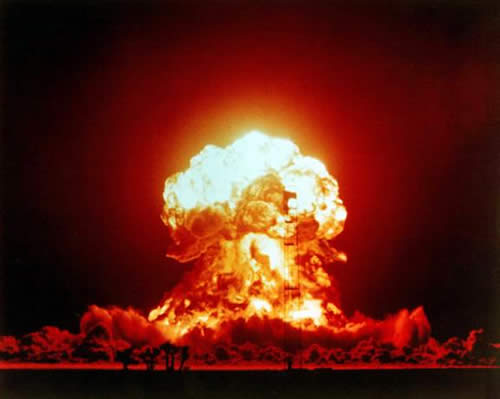
The Might : 7th Nuclear Power of the World

nuclear_explosion

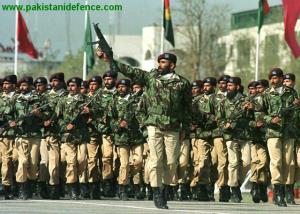
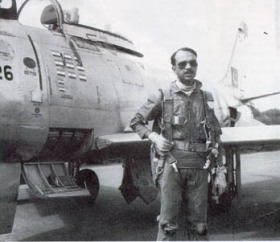
On May 28, 1998, Pakistan became the 7th nuclear power of the world giving a loud and clear message to the enemies that this nation is fully equipped and ready to defend it’s sovereignty. Pakistan has world 7th largest standing arm forces [1] well trained possessing state of the art technology. Pakistan Air force (PAF) is the symbol of pride for the nation and a galaxy of highly trained professionals emerged in latest technological developments. The highly skilled PAF personals are renowned for their excellence and handling of aircraft and surely are the worst fear for the enemies.

Pakistan: 7th largest Standing Arm Force in the World

Pakistan: 7th largest Standing Arm Force in the World

Air force :Air Commodore MM ALAM has a world record of shoting down 5 Indian planes in less than a Minute

Air force :Air Commodore MM ALAM has a world record of shoting down 5 Indian planes in less than a Minute

asdasdasdadPakistan : The Roof Top of the World

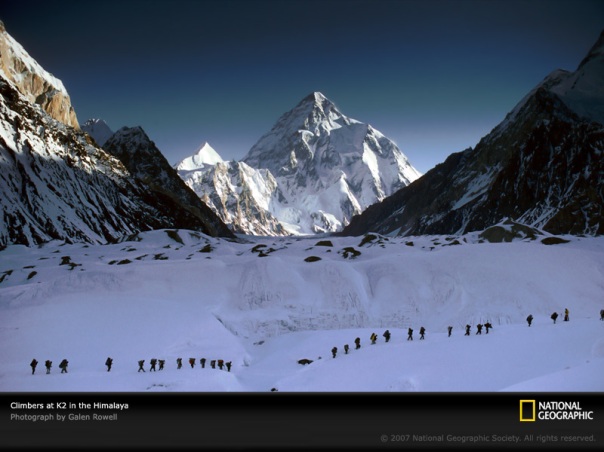
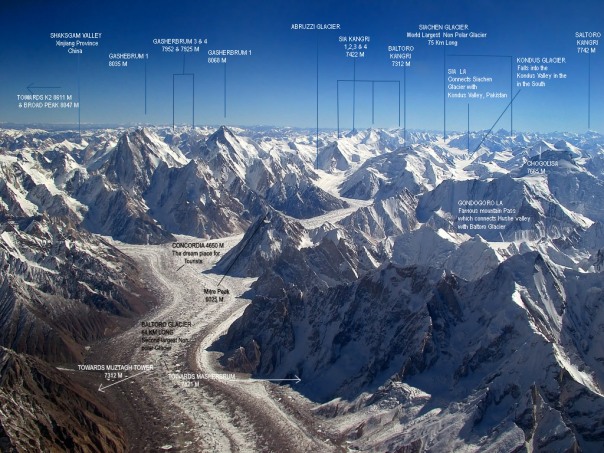
Pakistan the land of grand mountain ranges, a land that holds 4 out of 14 most highest peaks in the world. K2 the second highest mountain in the world with all it’s grandeur symbolizing the pride and strength of the people of Pakistan.

Pakistan: K2 the 2nd highest mountain peak in the World

Pakistan: K2 the 2nd highest mountain peak in the World

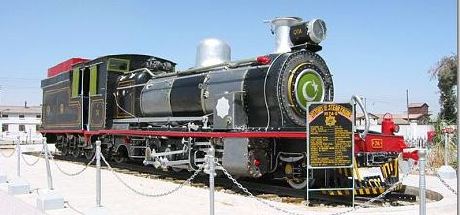
Hunza is said to be a place ” Where Time Stops and Fairy Treads“, Kalash and Chitral are the natural wonders of the world where poetic verses find their inspirations from the beauty and elegance of high peak mountains, lush green fields and the fragrant breeze singing across the poplar trees. Some of the places which are not highlighted by the media but still due to their magnitude find their places on the World record books are ; Aisa’s Highest Railway Station Kan Mehtarzai [2] that is located 2240 meters above sea level near Quetta.

Pakistan: Asia's Highest Railway Station

Pakistan: Asia’s Highest Railway Station “Kan Mehtarzai “

Pakistan: Lalazar often termed as most beautiful place on earth

Pakistan: Lalazar often termed as most beautiful place on earth

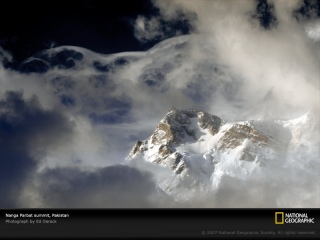
Pakistan: Nanga Parbat 9th Highest Peak in the World

Pakistan: Nanga Parbat 9th Highest Peak in the World

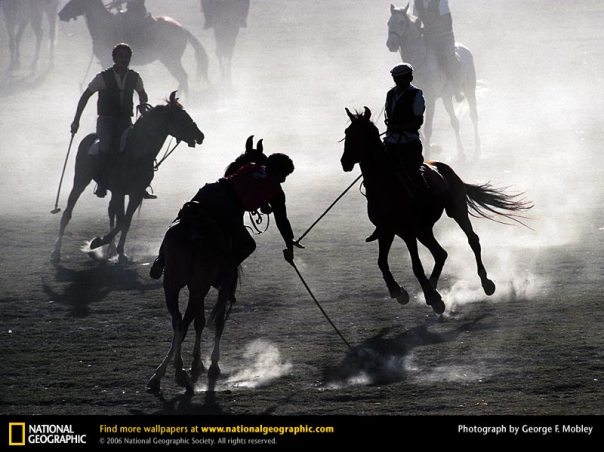
What it would feel like to play a sport that is wild, challenging and manly at the top of the world surrounded by the drumbeats and the music of the reed instrument. Yes Shandur Polo tournament is played every year at World’s highest Polo ground at Shandur, Northern Pakistan.

Pakistan: Shundur Polo festival at the World's highest Polo ground

Pakistan: Shundur Polo festival at the World’s highest Polo ground

Karakoram Highway : Eighth Wonder of the World


Karakoram Highway runs through the northern areas connecting Pakistan with China’s Xingjiang province is often described as ” Eighth Wonder of the World” due to the marvel of civil engineering as it has taken 15 years to complete by the Pakistan Army Engineers in collaboration with China. It’s been labeled as ” World’s highest paved international Road” under world’s toughest terrain.

karakorum1

Pakistan: Karakoram Highway World’s highest paved international Road

World’s Largest Deep Sea Port : Gwader


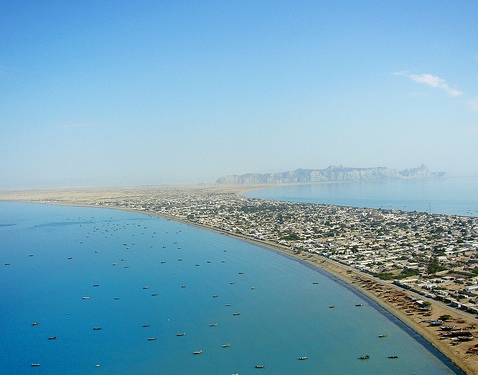
“Gwa” means Air and “Dar” means door, and the word Gawadar means ” The door of the wind” is the world’s largest deep sea port lies in southwestern Pakistani province of Balochistan. The design and construction of the port is carried out in collaboration with China and it has just started it’s operation.It’s going to emerge as a world’s biggest skyline due to it’s capacity and infrastructure of handling bulk carriers. It has been declared as a Duty Free Port and Free Economic Zone by the Pakistani government that has increased the commercial worth manifolds. It has an immense geostrategic importance as it is the entrance to the Persian Gulf and is considered to be a substitute of Dubai Port.

Gawader: World's Largest Deep Sea Port

Gawader: World’s Largest Deep Sea Port

Khewra Mines : Second Largest Salt Mine in the World


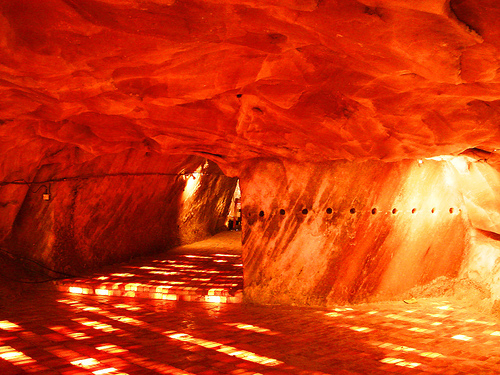
Khewra Salt Mine located in Khewra, Jehlum Punjab, Pakistan is the second largest Salt Mine in the world and is considered to be the oldest in the subcontinent. It was said that discovery of Salt mines were not done by Alexander or his army but by their horses as they started licking the stones when they stopped here for rest. Thousand of visitors each year visit Khewra Salt mines and get fascinated by the nature’s miracle in the heart of mountains.

Khewra Salt Mine: Second Largest Salt Mine in the World

Khewra Salt Mine: Second Largest Salt Mine in the World

Haleji Lake : Asia’s largest Bird Sanctuary


Pakistan is a land of serene beauty , a country with diverse wild life , fresh water lakes, a 1046 km coast lines. Some of the most unique species of birds are found in northern Pakistan with awe-inspiring natural wonders like Lake Saiful Maluk, Lake Shandur, Dudipatsar Lake, kutwal lake, Zalzal lake and many more. But Haleji has it’s own significance as it is Asia’s largest waterfowl reserve. During winter thousands of birds of different species fly down to Haleji from Siberian colder areas

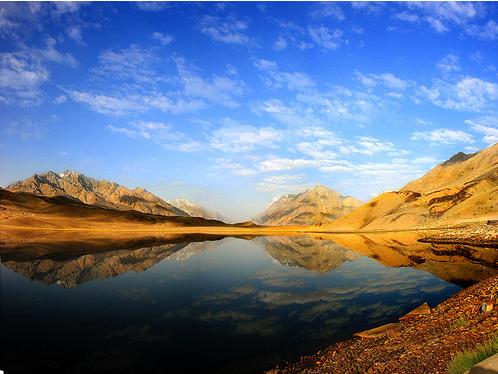
Pakistan: Fairy land Shandur Lake

Pakistan: The heavenly Shandur Lake

Thar Desert : One amongst the largest deserts in the World


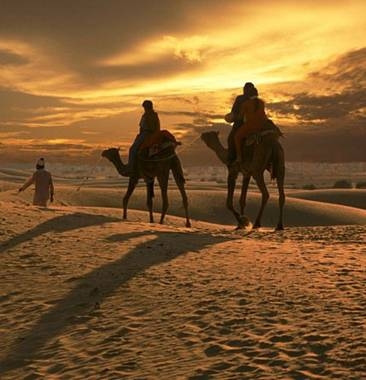
Thar is a arid region in the north western part of Indian subcontinent, it lies mostly in Indian state of Rajasthan but it covers eastern Sindh province and the southeastern portion of Pakistan’s Punjab province. It is amongst one of the largest deserts in the world rich multifaceted culture, heritage, traditions, folk tales, dances and music. The poetic expression of Kafi written by Sufi poets of Sindh resonates in the cold nights as the Thari musicians start singing them on sorrowing rhythmic beats. In the night the granules of the sand lit up like stars as the moonlight walks on them.

Pakistan: Tharparker

Pakistan: Tharparker

The land of oldest Civilization : Indus Valley and Mohenjo-Daro


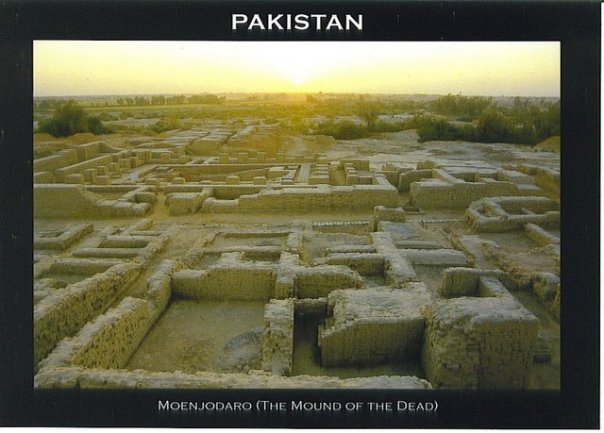
Moenjodaro is the province of Sindh, Pakistan and archeology trace back it exitence 5000 years ago. It provides an earliest instance of exemplary form of town planning and community organization and found to be as one of the oldest cities known today. It is said to be the pilgrimage of ancient ruins. The splendor of Indus Valley civilization spread over a thousand mile from the high peak snowy mountains of Kashmir to the glittering sand dunes facing the Arabian Sea. One of the oldest known civilization that flourished in the Indus river Basin embraced within its fold almost the entire country now known as Pakistan.

One of the oldest Civilization Known today

One of the oldest Civilization Known today

Friday, February 5, 2010

Peshawar


Peshāwar Persian is the capital of the North-West Frontier Province and the administrative centre for the Federally Administered Tribal Areas of Pakistan. Peshawar" literally means "The Place at the Frontier" in Persian and is known as Pekhawar in Pashto or Pukhto. The area of the city has been ruled by numerous empires including the Afghan, Persian, Shahi, Greek, Maurya, Scythian, Arab, Turk, Mongol, Mughal, Sikh and the British.

In ancient times, a major settlement called Purushpur was established by Kanishka, the king of the Central Asian Kushans, in the general area of modern Peshawar. Purushpur emerged as a major center of Buddhist learning until the 10th century, and was the capital of the ancient Indo-Greek kingdom of Gandhara. During that time, the Kanishka stupa on the outskirts of Peshawar, was the tallest building in the world - rising to almost 700 feet.

The current city was established during the Mughal period in the 16th century by Akbar during which it received the name Peshawar. During much of its history, the city was one of the main trading centres on the ancient Silk Road and was a major crossroads for various cultures between South Asia, Central Asia and the Middle East.

Located on the edge of the Khyber Pass near the Afghan border, Peshawar is the commercial, economic, political and cultural capital of the Pashtuns in Pakistan. It is as a geographical and cultural frontline between extremist, moderate, and liberal Islam.

History of Peshawar

History of PeshawarBeing among the most ancient cities of the region between Central, South, and West Asia, Peshawar has for centuries been a centre of trade between Afghanistan, South Asia, Central Asia and the Middle East. As an ancient center of learning, the 2nd century B.C.E. Bakhshali Manuscript used in the Bakhshali approximation was found nearby. Peshawar is also the setting of the famous story Peshawar Nights, which was an exchange between a Shia scholar and a Sunni audience over the course of eleven nights, which presumably resulted in their acceptance of Shi'ism.

Peshawar was a major center of Buddhist learning until the 10th century. As an indication of its importance, Peshawar was also the site of Kanishka's Great Stupa which housed relics from Gautama Buddha, and was widely considered to be the tallest building in the world at the time of its construction. Ancient Chinese manuscripts tell of Buddhist pilgrims such as Faxian, Sung Yun, and Xuanzang reporting that the 7th century stupa, which was rediscovered in 1908, had a height of 591–689 feet.

Indo-Greek Peshawar

bazaar peshawarThe area that Peshawar occupies was then seized by the Greco-Bactrian king, Eucratides (170 - 159 BCE), and was controlled by a series of Greco-Bactrian and later Indo-Greek kings who ruled an empire that spanned from ancient Pakistan to North India. Later, the city came under the rule of several Parthian and Indo-Parthian kings, another group of Iranic invaders from Central Asia, the most famous of whom, Gondophares, ruled the city and its environs starting in circa 46 CE, and was briefly followed by two or three of his descendants before they were displaced by the first of the "Great Kushans", Kujula Kadphises, around the middle of the 1st century CE.

Kanishka's Rule

Peshawar formed the eastern capital of the empire of Gandhara under the Kushan king Kanishka, who reigned from at least 127 CE. Peshawar became a great centre of Buddhist learning. Kanishka built what may have been the tallest building in the world at the time, a giant stupa, to house the Buddha's relics, just outside the Ganj Gate of the old city of Peshawar.
Excavations of Kanishka's Monastery in central Peshawar

The Kanishka stupa was said to be an imposing structure as one travelled down from the mountains of Afghanistan onto the Gandharan plains. The earliest account of the famous building is by the Chinese Buddhist pilgrim monk, Faxian, who visited it in 400 and described it as being over 40 chang in height (probably about 120 m or 394 ft) and adorned "with all precious substances". "Of all the stûpas and temples seen by the travellers, none can compare with this for beauty of form and strength." It was destroyed by lightning and repaired several times. It was still in existence at the time of Xuanzang's visit in 634. From the ruined base of this giant stupa there existed a jewelled casket containing relics of the Buddha, and an inscription identifying Kanishka as the donor, and was excavated from a chamber under the very centre of the stupa's base, by a team under Dr. D.B. Spooner in 1909. The stupa was roughly cruciform in shape with a diameter of 286 feet (87 meters) and heavily decorated around the sides with stucco scenes.

Sometime in the 1st millennium BCE, the group that now dominates Peshawar began to arrive from the Suleiman Mountains of southern Afghanistan to the southwest, the Pashtuns. Whether or not the Pashtuns existed in the region even earlier is debatable, as evidence is difficult to attain. Some writers such as Sir Olaf Caroe write that a group that may have been the Pakhtuns existed in the area and were called the Pactycians by Herodotus and the Greeks, which would place the Pakhtuns in the area of Peshawar much earlier along with other Aryan tribes. Ancient Hindu scriptures such as the Rig-Veda, speak of an Aryan tribe called the Pakht, living in the region.

Regardless, over the centuries the Pakhtuns would come to dominate the region and Peshawar has emerged as an important center of Pakhtun culture along with Kandahar and Kabul as well as Quetta in more recent times. Muslim Arab and Turkic arrived and annexed the region before the beginning of the 2nd millennium.

Arrival of Islam

Arrival of IslamThe Pakhtuns began to convert to Islam following early annexation by the Arab Empire from Khurasan (in what is today western Afghanistan and northeastern Iran).

Sebuktagin dying in 997 was succeeded as governor of Khorasan by his son Mahmud, who throwing of all dependence on the Samani princes, assumed the title of Sultan in 999, and from this reign the Hindu religion in these parts may be said to have received a death blow. In the early reign of this celebrated invader of India the plains of Peshawar were again the scene of some great battles, the first of which was fought on the maira between Nowshera and the Indus, in the year 1001. Mahmud was opposed by Jaipal, who had been constantly endevouring to recover the country wrested from him by Sebuktagin, still aided by some Pathans whose allegiance to the Muslim governor of Peshawar was not of long continuance.

The battle took place on November 27 and the Hindus were one again routed, Jaipal himself being taken prisoner, who upon his subsequent release resigned the crown to his son Anandpal. On this occasion Mahmud punished the Pathans who had sided with the enemy, and as they were now converted entirely to the Islam, they stayed true to their new allegiance, and joined the Sultan in his wars against the infidels.

Peshawar was taken by Turkic Muslims in 988 and was incorporated into the larger Pakhtun domains by the 16th century. The founder of the Mughul dynasty that would conquer South Asia, Babur, who hailed from current Uzbekistan, came to Peshawar and founded a city called Bagram where he rebuilt the fort in 1530. His grandson, Akbar, formally named the city Peshawar, meaning "The Place at the Frontier" in Persian and expanded the bazaars and fortifications. The Muslim technocrats, bureaucrats, soldiers, traders, scientists, architects, teachers, theologians and Sufis flocked from the rest of the Muslim world to Islamic Sultanate in South Asia and many settled in the Peshawar region.

Reigns of the Pashtun Kings

The Pakhtun conqueror Sher Shah Suri, turned Peshawar's renaissance into a boom when he ran his Delhi-to-Kabul Shahi Road through the Khyber Pass and Peshawar. Thus the Mughals turned Peshawar into a "City of Flowers" by planting trees and laying out gardens similar to those found to the west in Persia. Khushal Khan Khattak, the Pakhtun/Afghan warrior poet, was born near Peshawar and his life was intimately tied to the city. Khattak was an early Pakhtun nationalist, who agitated for an independent Afghanistan including Peshawar. As such, he was an implacable foe of the Mughal rulers, especially Aurangzeb.

After the decline of the Mughal Empire, by the 18th century the city came under Persian control during the reign of Nadir Shah. In 1747, following a loya jirga, Peshawar would join the Afghan/Pakhtun empire of Ahmad Shah Durrani as a Pakthun region. Pakhtuns from Peshawar took part in the incursions of South Asia during the rule of Ahmad Shah Durrani and his successors.

Reigns of the Pashtun Kings

The Pakhtun conqueror Sher Shah Suri, turned Peshawar's renaissance into a boom when he ran his Delhi-to-Kabul Shahi Road through the Khyber Pass and Peshawar. Thus the Mughals turned Peshawar into a "City of Flowers" by planting trees and laying out gardens similar to those found to the west in Persia. Khushal Khan Khattak, the Pakhtun/Afghan warrior poet, was born near Peshawar and his life was intimately tied to the city. Khattak was an early Pakhtun nationalist, who agitated for an independent Afghanistan including Peshawar. As such, he was an implacable foe of the Mughal rulers, especially Aurangzeb.

After the decline of the Mughal Empire, by the 18th century the city came under Persian control during the reign of Nadir Shah. In 1747, following a loya jirga, Peshawar would join the Afghan/Pakhtun empire of Ahmad Shah Durrani as a Pakthun region. Pakhtuns from Peshawar took part in the incursions of South Asia during the rule of Ahmad Shah Durrani and his successors.

Decline Under Sikh Rule

Ranjit Singh lead the Sikh army and invaded Peshawar in 1818 after wresting it from Afghanistan - resulting in Peshawar's darkest times as a part of The Sikh Kingdom of Punjab. In the wars between to two nations, the city's population was decimated as up to half of its inhabitants were killed or expelled under the Sikh reign.The famous mosque at Ghor Khatri which was built by Jahan Ara Begum, daughter of Emperor Shahjahan, was destroyed by the Sikhs around 1823 and replaced with a temple to Gorakhnath, which remains until the present day

All but one of Peshawar's grand Mughal mosques were destroyed under Sikh rule. In contradiction to some Sikh sources, which continue to insist that no Sikh ever desecrated a mosque, of the many Mughal mosques that existed prior to the Sikh invasion, only the Mohabbat Khan Mosque survived Sikh depredations as it was used as an execution ground. Even there, the Sikhs destroyed the crowns of the minarets which had to be rebuilt later by the British

Sikh rule of the city from 1834 to 1843 was administered under an Italian general named Paolo Di Avitabile, whose reign was described as one of "gallows and gibbets".

British Gazetteers noted that General Avitable used the minarets of the famed Mohabbat Khan Mosque as gallows.[29][30][31] Despite claims that no Sikh desecrated a mosque, the desecration of Peshawar's mosques by their appointed administrator is well documented.

f the monuments of the Muslim period, too very few have survived our own times, not because the Muslim kings were not endowed with architectural tastes and talents or that they did not construct any attractive edifices, but because everything of architectural value that existed here was destroyed by the Sikhs, especially during Avitabile’s reign as the Governor of Peshawar. The only buildings of any antiquity and historical interest are the Gor Khatri, also called Serai Jahanabad, and the Mosque of Mahabat Khan. Even these did not escape the tyrant’s hand, while the mosque was desecrated and its lofty minars were used as gallows, the Serai was converted into the residence of the governor, and the mosque of Jahan Ara Begum built inside was replaced by a temple, which still stands there.

The Sikhs also proceeded to destroy Peshawar's own Shalimar Gardens, as well as burn a large portion of the city. They felled many trees in the city gardens for use as firewood. The Sikhs also destroyed much of the Bala Hisar Fort during their reign, but rebuilt it in its current form under the governance of Hari Singh Nalwa, briefly renaming it Samir Garh.

Colonial Peshawar

With the collapse of the Sikh Empire, following the passing by of Maharaja Ranjit Singh and the Sikh defeat in the second Anglo-Sikh War, the British occupied Peshawar, much to the relief of its citizens who had endured the brutal conditions of Sikh occupation.

The mountainous areas outside of the city were mapped out in 1893 by Sir Mortimer Durand, then foreign secretary of the British Indian government, who demarcated the boundary of his colony with the Afghan ruler at the time, Abdur Rahman Khan. It is now known as the Durand Line. The Kabul government has argued that the pact expired when British colonialists left the region - although claims to the region have not been a part of official Afghan policy.

Independence and Afghan Instability

In 1947, Peshawar became part of the newly independent state of Pakistan after politicians from the Frontier approved merger into the state that had just been carved from British India. While a large majority of people approved of this action, others believed in the unity of India, such as Abdul Ghaffar Khan. Still others believed that the province should have ascended to Afghanistan - a position which later evolved into a call for a state independent of both Pakistan and Afghanistan.

Until the mid-1950s, Peshawar was enclosed within a city wall and sixteen gates. Of the old city gates, the most famous was the Kabuli Gate but only the name remains to this date. Peshawar has not grown as much in size or capacity as the population has. As a result it has become a polluted and overcrowded city

After the Soviet invasion of Afghanistan in 1979, Peshawar served as a political centre for the anti-Soviet Mujahideen, and was surrounded by huge camps of Afghan refugees. Many of the refugees remained through the Afghan civil war, which broke out after the Soviets were defeated in 1989, antecedent to the rule of the Taliban, and the invasion by American and allied forces in late 2001. Peshawar would replace Kabul and Kandahar as the centre of Pakhtun cultural development during this tumultuous period. Peshawar managed to assimilate many of the Pakhtun Afghan refugees with relative ease, while other Afghan refugees have remained in camps awaiting a possible return to Afghanistan.

Peshawar continues to be a city that links Pakistan to Afghanistan as well as Central Asia and has emerged as an important regional city in Pakistan. It remains a focal point for Pakhtun culture. Today, like the surrounding region, it is at the crossroads of the struggle between the extremist Taliban and moderates, liberals and Pakhtun nationalists. As a demonstration of their determination to destroy Pashtun icons, the Taliban bombed the shrine of the most beloved Pashtun poet, Rahman Baba, in 2009.

Old City of Peshawar

The historic old city of Peshawar was once a heavily guarded citadel with high walls. Today, not much remains of the walls, but the houses and havelis have an essence of days gone by. Most of the houses are made of unbaked bricks with wooden structures for protection against earthquakes. Many of them have beautifully carved wooden doors and latticed wooden balconies. Areas such as Sethi Mohallah still contain many fine examples of the old architecture of Peshawar. There are many historic monuments and bazaars in the Old city, including the Mohabbat Khan Mosque and Kotla Mohsin Khan, Chowk Yadgar and the Qissa Khawani Bazaar.

The walled city was surrounded by several main gates which severed as the main entry points into the city, some of which still survive today. They include:

  • Lahori Gate
  • Sarasia Gate
  • Ganj Gate
  • Sirki Gate
  • Sard Chah Gate
  • Kohati Gate

Educational institutions

With the level of higher education on the rise, there has been a surge of prestigious educational institutions in Peshawar.

  • Abasyn University
  • Khyber Medical University
  • Institute of Management Sciences
  • Agriculture University of Peshawar
  • University of Engineering & Technology (U.E.T.)
  • National University of Computer and Emerging Sciences (FAST-NU), (Peshawar Campus)
  • Islamia College Peshawar (1913)
  • Gandhara University
  • Iqra University
  • Institute of Management Studies
  • ICMS
  • Oxfords College University Town Peshawar
  • City University Of Science & Technology
  • Institute of Business & Management Sciences
  • CECOS
  • Gandhara Medical College
  • Sarhad University
  • Ghulam IOshaq Khan Institute of Science & Technology, Topi, NWFP
  • College of Aeronautical Engineering (CAE, NUST), Risalpur, NWFP
  • Peshawar Medical College
  • University of Peshawar
  • Preston University
  • Greenwich University
  • PAC
  • Government Frontier College Peshawar
  • Jinnah College for Women
  • Edwardes College Peshawar
  • Government College Peshawar
  • Superior Science College Wazirbagh Peshawar.
  • Fazaia Degree College (PAF Degree College)
  • St. Francis' High School
  • University Public School (1964)
  • University Model School
  • Peshawar Model School
  • Collegiate School Islamia College
  • Oxfords College School University Town Peshawar
  • Peshawar Public School and College
  • The Convent High School
  • Army Public School
  • BeaconHouse School System
  • The City School
  • The Educators
  • The Roots School
  • American International School
  • I.L.M
  • The Smart School
  • Qadeems Educational System
  • Iqra School
  • daffodils Kindergarten (Hayatabad Town)
  • Frontier Model School
  • Peshawar Grammar School
  • Lahore Grammar School (Peshawar Campus)
  • Saint Mary's High School
  • Forward Model School
  • Forward Public School
Pakistan Squash

These web pages present the past, present, and future of Pakistani Squash.

Squash and Pakistan are inextricably linked. The Khan extended family, Hashim, Azam, Roshan, and Nazrullah, emerged onto the world scene to bring squash to new levels of excellence at the same moment that the nation of Pakistan came into being.

Because of the vision of several prominant Pakistanis, such as Nur Khan of PIA, squash in Pakistan grew to be much more than just one family, but to encompass an entire tradition of excellence and creativity, such that one nation came to totally dominate the sport for many years.

I would like to thank several of my good friends and acquaintances, Arif Sarfraz, Sharif and Gul Khan, and Sakhi Khan for access to their photographs and information; and especially to Jahangir Khan for the Khan family photographs.

Sincerely, Ron Beck, Squashtalk

[contents of these pages]

[contribute information for these pages]


Hashim Khan, 7 timest British Open Champion, tries the Masters in 1990 (photo © Stephen J Linel)


Pakistan I versus Pakistan II in 1976: From left, Mohibullah Jr/Gogi/Torsam/Sajjid Munir/Omer Zarad/Qamar Zaman/Nur Khan/Hashim/Manzur Awan (PAF)/Abdul Rehuan/Maqsood Ahmed/Saleem/Atlas Khan (photo © 2000 Squashtalk, Jahangir Khan collection)


Jahangir always rose to the occasion at the BritishOpen with domination and grace. (photo by Fritz Borchert)


Roshan, Azam and Mo, all British Open winners. (photo © 2000 Squashtalk, Jahangir Khan Collection)


Mo Khan hands off dominance in North America to Sharif Khan at the North American Open.


Jahangir Khan (10x British Open winner) against Janshers(photo Courtesy Jahangir Khan ©2000 Squashtalk )


Azam followed Hashim with four British Open victories.(Khan family photo courtesy Khansquash.com)


The talented but enigmatic Jansher Khan took home six British Open crowns before succombing to knee ailments.


Torsham Khan - a great squash talent, and Jahangir's brother, died tragically on court in the Australian Open, 1979(photo © Stephen J Linel)

Pakistan

Pakistan: The land of Emperors


Derawar Fort - Cholistan Desert

Derawar Fort – Cholistan Desert

Pakistan, a piece of land that had been dreamed by the mightiest Emperors in the history of mankind. Whether it was the Aryans in 1,700 B.C followed by the armies of Cyrus the great which later overcome by Alexander the great who stopped it’s voyage of conquer due to the harsh desert regions of Baluchistan, Afghanistan and Iran. Later came Ashoka, the Parthians and lastly the Great Mughal Emperors , all of them left behind monumental signs of their glory in this region. The architecture and design of their Forts symbolizes their strength, knowledge and their pride. Pakistan is endowed with charismatic and mind impelling forts of these great emperors. Ranikot Fort is the World’s largest Fort [1] with a circumference of 18 miles located 30 km south of Jamshuru District, Sindh Pakistan. Derawar, Rohtas, Attock, Giri, Rawat and most famous of all Royal Fort Lahore are few of the notable jewels of Pakistani heritage.

Ranikot Fort: World's Largest Fort with a circumference of 18 miles

Ranikot Fort: World’s Largest Fort with a circumference of 18 miles